
What Is Glutathione?

I do not love the taste of blueberries. I still take handfuls and drop them into my yogurt and smoothies, and it is a small fight every time, because I know they are a great source of antioxidants. That reminder is usually enough to get them down.
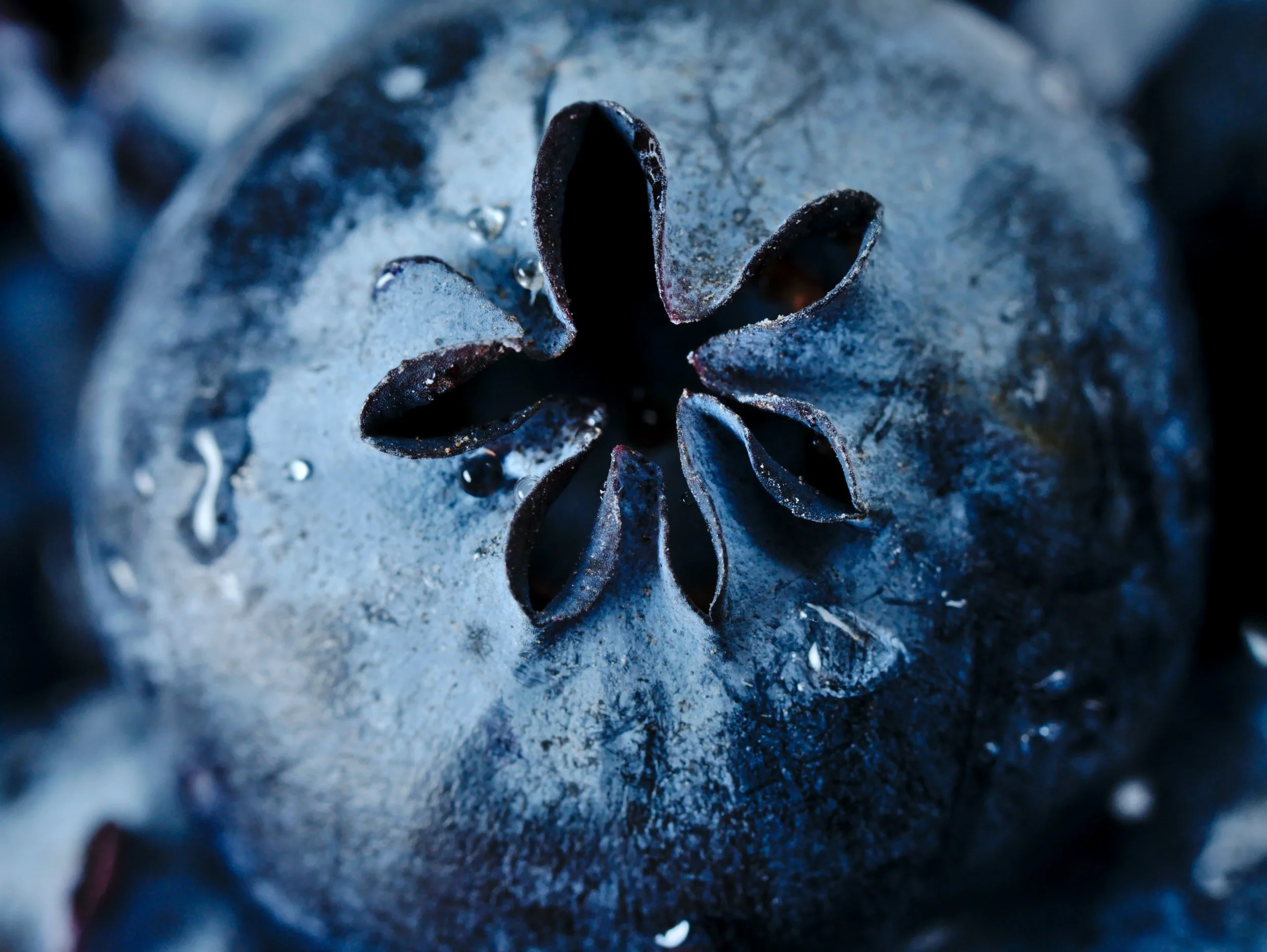
Antioxidants have been a hot topic in health for a decade now, and for good reason. They are free radical scavengers, which means they slow the damage to cells caused by unstable molecules the body produces in response to stress and the environment.
Here is the part most people do not know. The most important antioxidant in your body is not in a blueberry at all. Your body makes it, and it sits inside every cell you have.

What Glutathione Actually Is
Glutathione is a small molecule your body builds out of three amino acids: glutamate, cysteine, and glycine. Researchers call it a tripeptide. It is the most abundant antioxidant of its kind in the human body, and unlike vitamin C or vitamin E, you do not have to eat it to have it. You make it.
You will often see it written as GSH, and you will often see it called the master antioxidant. That nickname is not marketing. It comes from the research literature, and it exists because glutathione does something the other antioxidants do not. It helps regenerate them. Vitamin C and vitamin E get used up when they neutralize a free radical, and glutathione helps return them to a usable state. It sits at the top of the chain.
What Glutathione Does in the Body
Glutathione is involved in a long list of ordinary, everyday processes. The main ones:
It neutralizes free radicals. This is the job most people associate with antioxidants. Glutathione directly quenches reactive molecules before they damage cell components, including DNA.
It supports the body's natural detoxification pathways. Your liver uses glutathione to bind certain compounds and make them easier to clear. This is a normal, continuous process, not a cleanse.
It recycles other antioxidants. As above, it helps keep vitamins C and E working.
It supports normal immune function. Glutathione plays a role in how immune cells operate and in the body's inflammatory signaling.
It supports tissue repair and DNA synthesis. Glutathione is part of how the body builds and maintains itself.
None of that is exotic. It is basic cellular housekeeping, happening constantly, in you, right now.
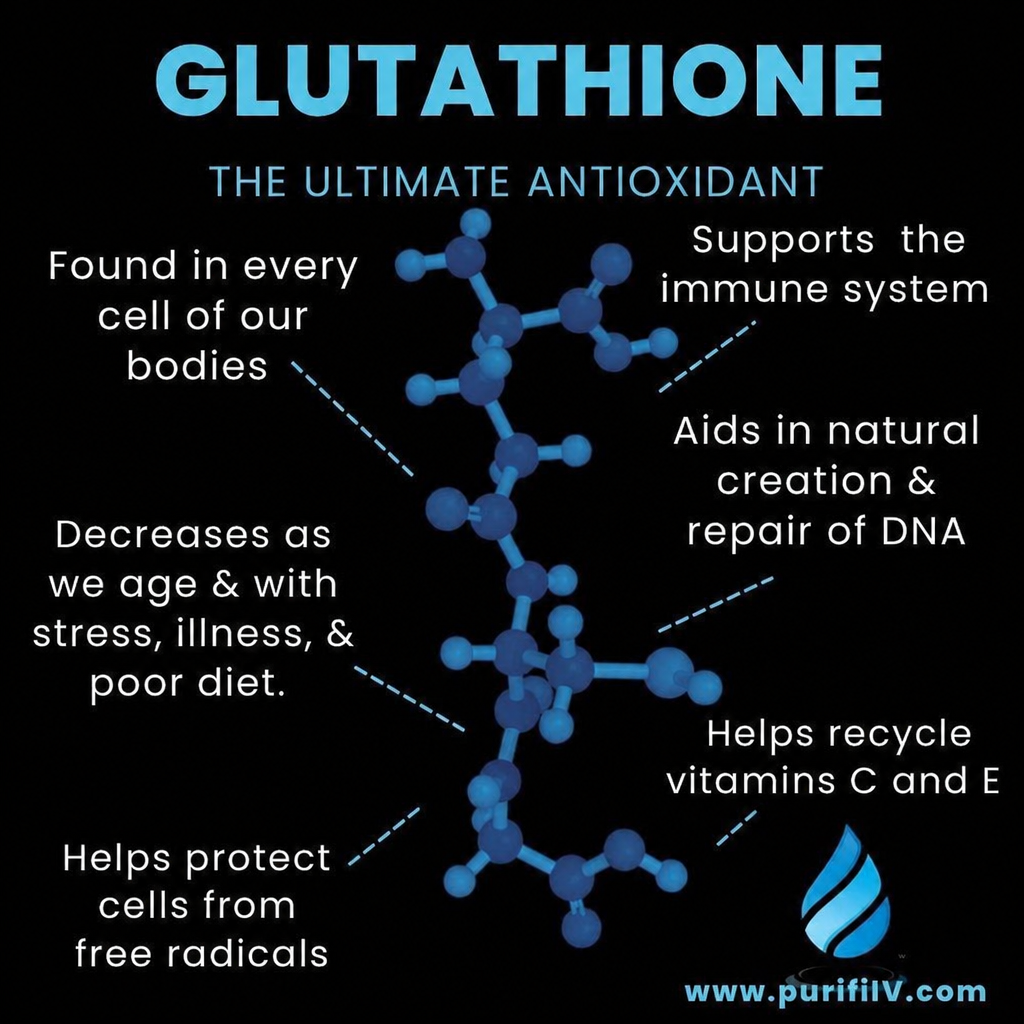
Here is our glutathione infographic
Why Glutathione Levels Drop
Glutathione tends to decline as we age. Levels can also run lower with ongoing stress, poor sleep, a diet short on protein and produce, heavy alcohol use, and periods of illness.
That last one matters more than people expect. Your body spends glutathione when it is under load. A stretch of bad sleep, a hard training block, a rough week, or a bug going around the house all draw on the same account.

Living a healthy life with reduced stress, physical activity, and a balanced diet can increase your body’s production of glutathione
How to Support Your Body's Own Glutathione
The unglamorous answers work, and they should come first.
Eat enough protein. Glutathione is built from amino acids, and your body cannot make it out of nothing. Adequate protein is the foundation.
Eat sulfur rich vegetables. Broccoli, Brussels sprouts, cabbage, cauliflower, garlic, and onions all support glutathione production.
Sleep. Poor sleep is consistently linked with lower antioxidant capacity.
Move regularly and keep alcohol moderate. Both affect how much glutathione your body has available to spend.
Eat your fruits and vegetables. Yes, including the blueberries.
Glutathione at Purifi IV
At Purifi IV in Suwanee we offer glutathione two ways.
As an IV add on. Glutathione can be added to any of our signature drips for $50, or $35 for members. If you are already coming in for a drip, this is the simplest way to include it.
In The Shield. The Shield is our tri immune injection, combining zinc, ascorbic acid, and glutathione, for $30, or $21 for members. It is a quick option if you are not doing a full drip that day.
Either way, you will be seen by our team. Purifi IV was founded and is staffed by emergency medicine trained providers, and everything is done under medical direction.
What to Expect Afterward
One honest heads up, because we would rather you hear it from us than be surprised.
Some people feel slightly off on the day of a glutathione service. A little tired, a little washed out. This is common, it is short lived, and it is tied to glutathione doing exactly what it does in the body's clearance pathways. If you have something important that evening, it is worth planning around. Most people feel completely normal by the next day.
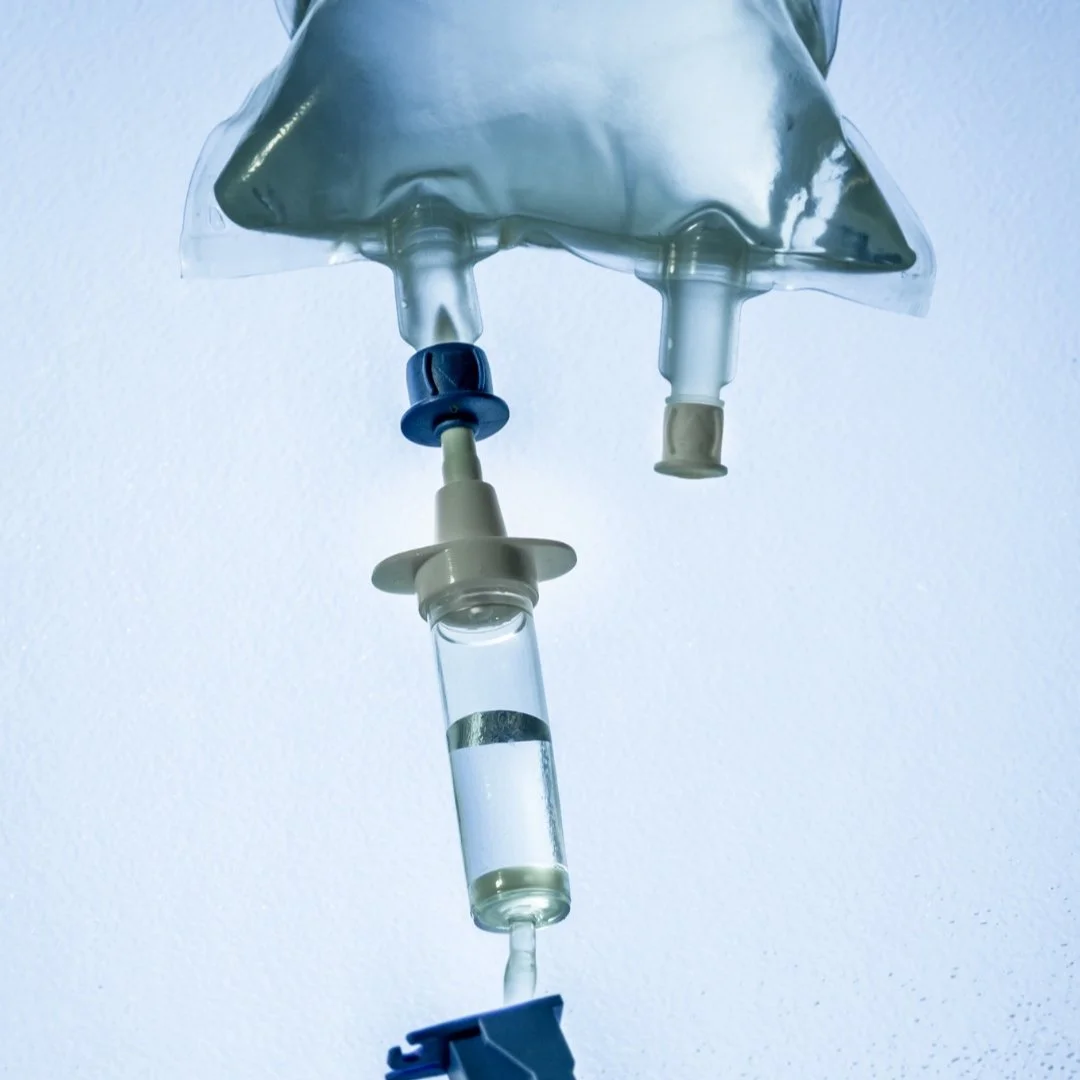
Try glutathione in any drip
Common Questions
Is glutathione the same as an antioxidant supplement? Not quite. Most antioxidant supplements give you a nutrient your body uses. Glutathione is a molecule your body already makes, and it helps manage the other antioxidants as well.
Can I just eat glutathione? You can eat foods that support your body's production of it, and you should. Glutathione itself is present in fresh fruits, vegetables, and freshly prepared meats, though the body largely builds its own from amino acid building blocks.
Do I have to book a full drip? No. The Shield injection includes glutathione and takes just a few minutes.
How often do people come in? It varies, and it should. Some clients add glutathione to a routine monthly drip, others use it occasionally. Come talk to us about what makes sense for you rather than following a schedule you read online.
Come See Us
If you have been curious about glutathione, come in and ask us about it. We would rather walk you through it in person than have you piece it together from the internet. You can book at www.purifiiv.com/book-appointment, or stop by and say hi. We are on Peachtree Industrial Boulevard in Suwanee.
Be hydrated. Be rejuvenated. Be well.
This post is for general informational purposes and is not a substitute for professional medical advice, diagnosis, or treatment. Always consult a qualified healthcare provider with questions about your health.
References
Minich DM, Brown BI. A Review of Dietary (Phyto)Nutrients for Glutathione Support. Nutrients. 2019;11(9):2073. https://pmc.ncbi.nlm.nih.gov/articles/PMC6770193/
Wu G, Fang YZ, Yang S, Lupton JR, Turner ND. Glutathione metabolism and its implications for health. The Journal of Nutrition. 2004;134(3):489-492. https://pubmed.ncbi.nlm.nih.gov/14988435/
Labarrere CA, Kassab GS. Glutathione: A Samsonian life-sustaining small molecule that protects against oxidative stress, ageing and damaging inflammation. Frontiers in Nutrition. 2022;9:1007816. https://www.frontiersin.org/journals/nutrition/articles/10.3389/fnut.2022.1007816/full
Hristov BD. The Role of Glutathione Metabolism in Chronic Illness Development and Its Potential Use as a Novel Therapeutic Target. Cureus. 2022;14(9):e29696. https://pmc.ncbi.nlm.nih.gov/articles/PMC9616098/
Written and reviewed by Johnathon Nolen, and Dr. Jeremy Nelson.
Get our favorite recipe and the latest wellness research, once a month.
Join the Purifi IV Wellness Email